BCR · Category
Live Baccarat in the UK: How the Online Tables and Their Rules Work
Live baccarat in the UK is the most rule-bound of the live table categories. Two hands are dealt to a fixed set of drawing rules, everybody at the table bets on the outcome rather than on a hand of their own, and no player decision affects what happens once the cards are out.
That makes the differences between tables narrow but real: the commission on the Banker bet, whether a table has removed it, which side bets exist, and how the round is presented online. This page explains the format and marks the table-level details we cannot source as unknown.
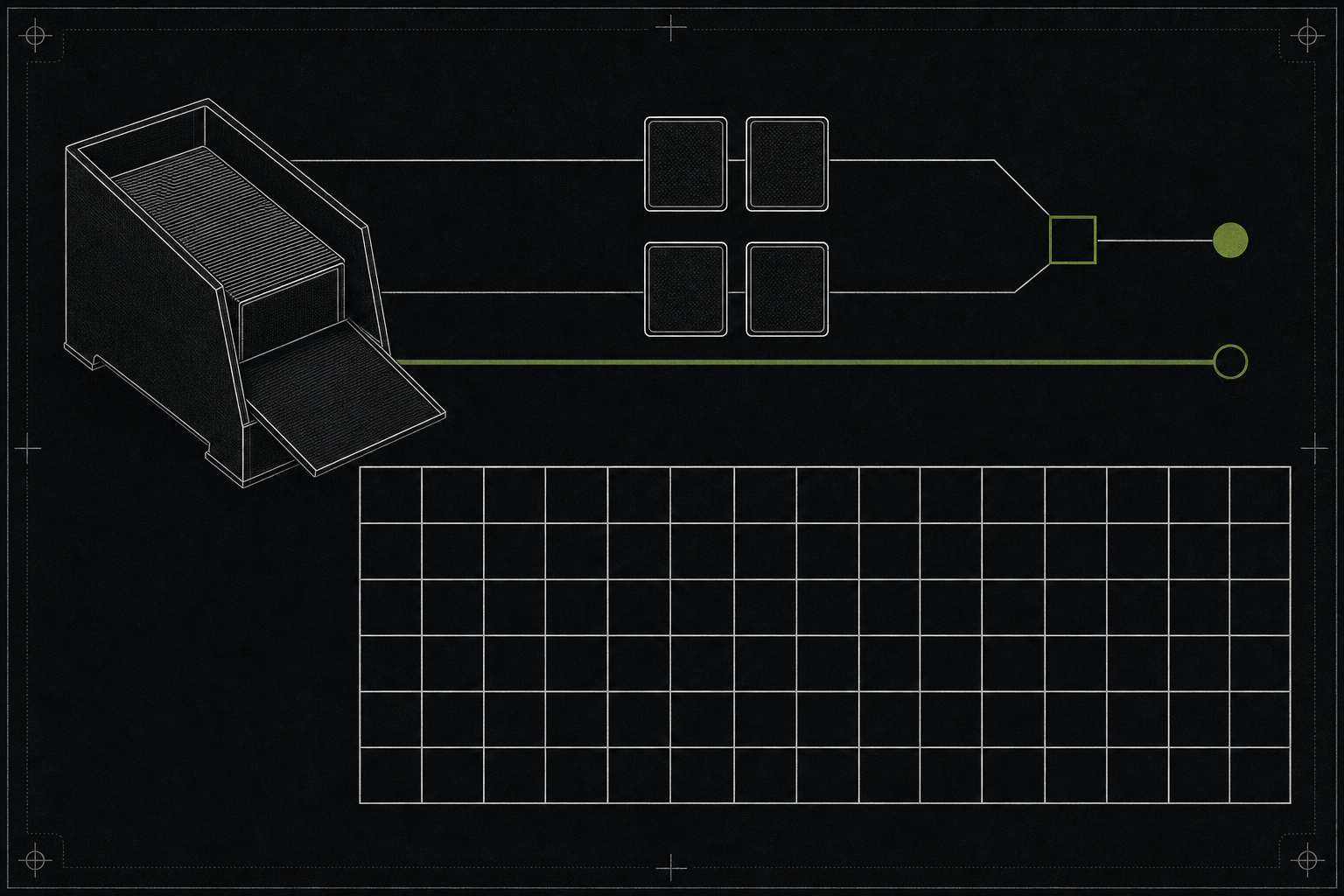
How live baccarat works online
Five steps per round, and only the first involves a decision by you.
- 01
Two hands, not yours
The dealer deals one hand to the Player position and one to the Banker position. Neither belongs to you. You are betting on which of the two will finish closer to nine, or on the two finishing level.
- 02
Betting closes, then the cards come out
A countdown governs the betting window. Once it closes the cards are dealt face up on camera, and from that moment nobody at the table has any influence over the outcome.
- 03
The totals are counted to nine
Tens and picture cards count as nothing, an ace counts one, and only the last digit of a total matters — a seven and a six make three, not thirteen. Eight or nine on the first two cards ends the round immediately.
- 04
The third card is a rule, not a decision
Whether either hand draws a third card follows a fixed table of rules that the dealer applies. This is the part that surprises players coming from blackjack: there is nothing to play, and no strategy decision exists to be made well or badly.
- 05
Settlement, and the shoe carries on
Winning bets are paid at the odds published for that table, the result is added to the score displays beside it, and the next round opens. When the shoe is changed is set by the table.
Live baccarat tables and why they have no seat limit
Because the two hands belong to the table rather than to individual players, an online live baccarat table has nothing to run out of. Any number of people can bet on the same round, so the queueing and seat-allocation problems that shape live blackjack simply do not arise here.
What does vary is the accounting. Live baccarat tables differ in the commission charged on winning Banker bets, in whether they have replaced that commission with a reduced payout, and in the side bets available. Those are the fields worth recording per table, and they are published in each table’s own rules panel rather than being properties of baccarat itself.
The score displays beside the table — the bead plate and the roads derived from it — are part of the format rather than decoration. They plot the shoe’s history in several notations at once, and a large part of the category’s appeal is reading them. They describe the past; the next hand is unaffected by any of it.
Check before you join
- The commission charged on winning Banker bets
- Whether it is a no-commission table, and what is reduced instead
- Which side bets the table offers
- Whether it is a squeeze or a speed presentation
The drawing rules, step by step
The part players most often assume is a decision. It is not — it is a fixed table the dealer applies identically every round.
Both hands receive two cards. If either total is eight or nine on those two cards, the round ends immediately and the higher total wins; this is called a natural, and no further cards are dealt to either side.
Otherwise the Player hand acts first, and its rule is simple: it draws a third card on a total of zero to five and stands on six or seven. The Banker hand then acts, and its rule depends both on its own total and on the card the Player drew. A Banker total of zero to two always draws; three to six draws or stands according to the Player's third card; and seven always stands.
No player at the table influences any of it, and neither does the dealer. The value of knowing the rules is not strategic — it is that you can follow what is happening while it happens, and see that the table is applying a published procedure rather than making choices.
Reading the road maps
The grids of marks beside the table are part of the format, and a large part of why players stay at one shoe rather than another.
The simplest is the bead plate: one mark per result, filling a grid column by column in the order the hands were dealt. It answers a single question — what happened, and in what sequence — and everything else is derived from it.
The big road plots the same results differently, starting a new column each time the winning side changes, so streaks appear as long columns and alternating runs appear as short ones. Three further grids are derived from the big road and describe how regular its pattern has been rather than what won.
Tie results and pairs are usually marked on top of the existing entries rather than taking a place of their own, which is why the roads can look denser than the number of hands played.
One thing the roads cannot do is indicate what comes next. Every hand is dealt from the same shoe under the same rules, and a long column describes the past only. They are a scoreboard, and the reason they are worth explaining here is that they are frequently presented elsewhere as though they were a forecast.
- Natural
- An eight or nine on the first two cards, which ends the round at once.
- Bead plate
- The simplest road: one mark per result in dealing order.
- Big road
- The main grid, starting a new column whenever the winning side changes.
- Commission
- The charge on winning Banker bets, published per table.
- No-commission
- A table that removes the commission and reduces one specific winning payout instead.
- Squeeze
- A presentation where the cards are revealed slowly on camera.
The three bets, the commission and the variants
Three bets carry the game. Everything else on the layout is optional and belongs to the individual table.
- Banker
- A bet that the Banker hand finishes closer to nine. Winning Banker bets normally carry a commission, and the size of it is published by the individual table rather than fixed by the game.
- Player
- A bet that the Player hand finishes closer to nine. It carries no commission, which is the reason the two bets do not pay identically despite looking symmetrical.
- Tie
- A bet that the two hands finish level. It wins rarely and pays proportionally more; the exact odds are a table rule and are printed in the table’s own paytable.
- No-commission tables
- Some live baccarat tables remove the commission on Banker wins and reduce the payout on one specific winning total instead. The bet is not free of cost — the cost has been moved, and where it has been moved to is published per table.
- Side bets
- Optional bets on pairs and on particular card combinations. Which ones a table offers, and what they pay, belongs to that table and not to baccarat. Read the table’s rules panel — we do not restate paytables from memory
- Squeeze and speed variants
- The same game with the cards revealed slowly on camera, or with the round compressed into a much shorter cycle. Presentation and pace differ; the drawing rules do not.
Live baccarat in the UK: what the licence covers
Any site offering live baccarat in the UK holds a remote casino licence from the UK Gambling Commission. The register publishes the licensee, the licence number and the date the current licence record began — the facts carried by the operator list on the homepage.
It does not publish anything about the tables themselves. Commission rates, side bets and which studio produces a given table are not regulatory information, so they are sourced from published table rules where those are available and left unknown where they are not.
The drawing rules in full
This is the whole of the procedure, in the order the dealer applies it. It is fixed, it is the same at every table, and no player action enters it at any point. Reading it once is enough to follow every round you will ever watch.
| Stage | Condition | What happens |
|---|---|---|
| Both hands, first two cards | Either hand totals eight or nine | A natural. The round ends at once and the higher total wins — no third card is dealt to either side |
| Player hand | Total of zero to five | Draws a third card |
| Player hand | Total of six or seven | Stands |
| Banker, after the Player stood | Total of zero to five | Draws a third card. On six or seven the Banker stands |
| Banker, after the Player drew | Total of zero, one or two | Always draws, whatever the Player’s third card was |
| Banker, after the Player drew | Total of three | Draws unless the Player’s third card was an eight |
| Banker, after the Player drew | Total of four | Draws if the Player’s third card was a two to a seven |
| Banker, after the Player drew | Total of five | Draws if the Player’s third card was a four to a seven |
| Banker, after the Player drew | Total of six | Draws if the Player’s third card was a six or a seven |
| Banker, after the Player drew | Total of seven | Always stands |
Two things stand out from the table once you have read it through. The Player hand acts on its own total alone, and the Banker hand acts on its total together with the card the Player just drew. That asymmetry is the entire reason the two bets are not mirror images of each other, and it is what the commission on the Banker bet exists to balance.
The second is that the procedure removes every decision from the round, including the dealer's. Nobody at a live baccarat table chooses anything after the betting window closes: the cards decide, the rules apply, the dealer executes. It is the most mechanical of the four live categories, and the reason a round is over so quickly.
Knowing the rules will not improve your results, and it is worth saying so directly rather than implying otherwise. What it does is let you follow the round while it happens, see that the table is applying a published procedure rather than making choices, and recognise immediately when something unusual has occurred — a natural, or a Banker standing on a total you expected it to draw on.
What varies between tables is not this procedure but the accounting around it: the commission on Banker wins, whether a table has removed it in exchange for reducing one specific payout, and which optional side bets exist. Those sit in each table's own rules panel, and our evidence standard explains why we point you there instead of restating figures that belong to an individual table.
The three bets, weighed against each other
Baccarat asks one question per round. These are the three answers available, and they are not equivalent.
Banker and Player look symmetrical and are not. The drawing rules give the Banker hand the last word — it acts after the Player and, on several totals, acts differently depending on what the Player drew. Acting last with information is an advantage in any procedure, and here it produces a small but persistent one. The commission charged on winning Banker bets is the table's way of pricing it, which is why a bet that wins slightly more often does not pay quite as much when it does.
No-commission tables move that cost rather than remove it. The commission disappears and one specific winning Banker total is paid at a reduced rate instead. Whether that trade suits you depends on nothing you can influence, but the important point is that it is a trade — a table advertising no commission has not given anything away.
The Tie bet is the one worth understanding before you place it. It wins only when the two hands finish level, which is by some distance the least frequent of the three outcomes, and it pays proportionally more for exactly that reason. Presented beside two bets that resolve on almost every hand, it looks like the interesting option; structurally it is the one the drawing rules make hardest to hit.
Side bets on pairs and particular card combinations sit alongside the three, differ from table to table, and are settled independently of the main bet. Each one is published with its own paytable on the table that offers it, and that paytable is the only figure that applies to the seat you are in.
Three bets, one decision, no play. Everything else in live baccarat is presentation.
Live baccarat against the other three live categories
Baccarat asks less of you than any of the other three. Against live blackjack the contrast is total: blackjack gives you a decision on every card and punishes the wrong one, baccarat gives you a decision before the cards and nothing afterwards. Players who move from one to the other frequently describe the same surprise, which is how little there is to do.
Against live roulette, the difference is breadth. Roulette offers dozens of ways to describe one spin; baccarat offers three bets and a handful of optional extras. That narrowness is the appeal — the round is short, the choice is immediate, and the shoe moves on.
Against the live game shows, baccarat is the quiet option. There is no host carrying the round, no bonus stage, and no multiplier: a dealer, two hands and a scoreboard. The category has also barely changed in decades, where the game shows are rebuilt continually.
The one thing baccarat has that the others do not is the roads — the grids of coloured marks that plot how the shoe has run. They are genuinely part of the format rather than decoration, and following them is a large part of why players stay at one table for a whole shoe. They record the past and predict nothing, which is worth remembering while enjoying them.
The other live casino categories
Each family is described the same way: how a round works, what belongs to the individual table, and where the published rules can be read. The format comparison on the homepage puts all four side by side, alongside the operator list.
Common questions about live baccarat
Do I make any decisions in live baccarat?
Only which bet to place and how much. Once the betting window closes, whether either hand draws a third card is decided by a fixed table of rules that the dealer applies. There is no hitting, standing, splitting or doubling, which is why baccarat has no strategy in the sense that blackjack does.
Why does the Banker bet carry a commission?
Because the drawing rules give the Banker hand a small structural advantage, and the commission is how the table balances that. The size of the commission is published by the individual table. Some tables remove it altogether and reduce the payout on one specific winning total instead — the cost has been moved rather than removed.
What are the grids of coloured marks beside a live baccarat table?
Road maps: a record of how the shoe has run so far, plotted in several different notations at once. They are part of the format and many players read them closely. They describe results that have already happened and carry no information about the next hand.
Can a live baccarat table be full?
No. Nobody is dealt a hand of their own, so any number of players can bet on the same two hands at the same time. That is the structural difference from live blackjack, where the number of betting positions is fixed.